
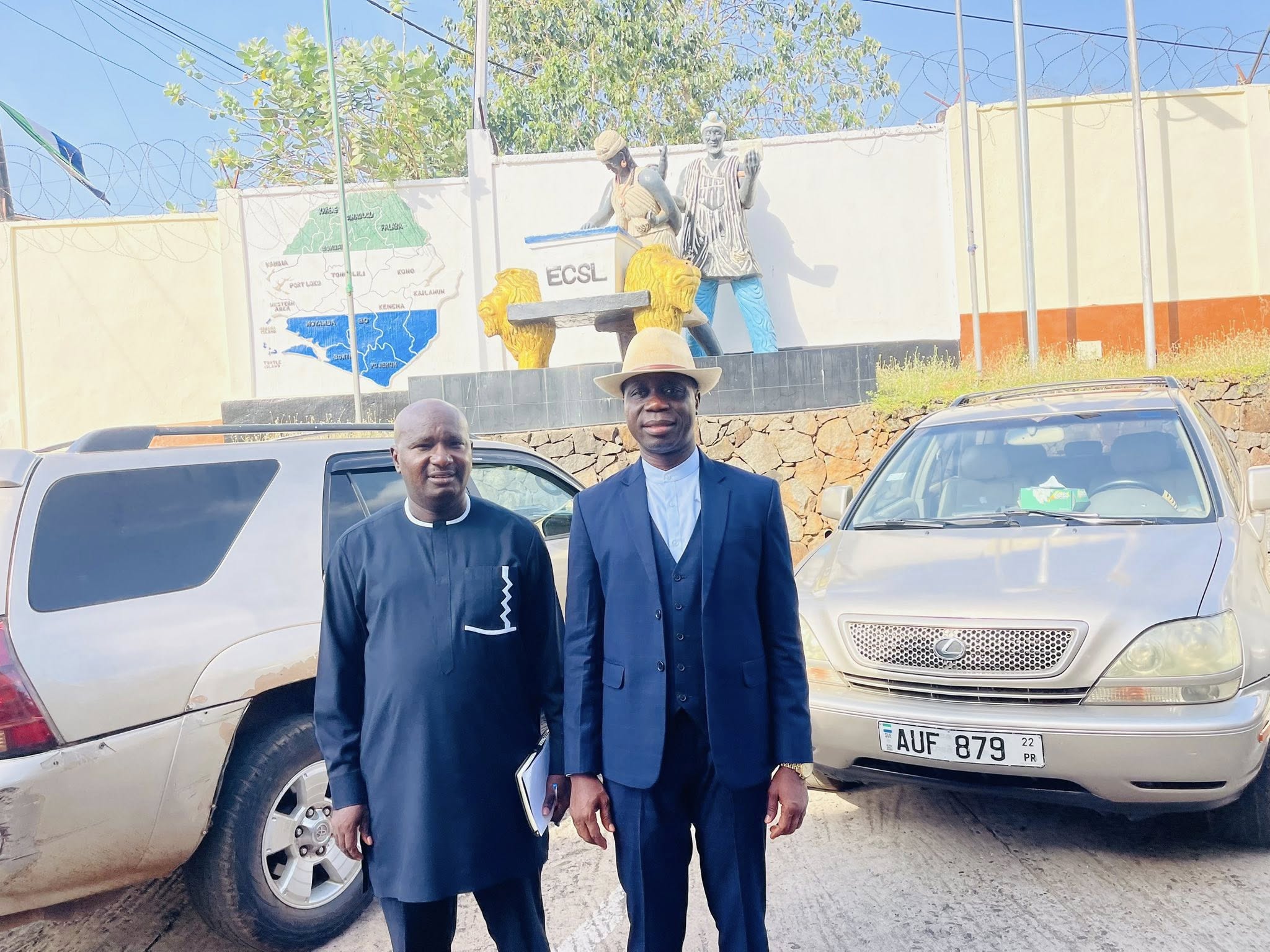
14th May 2026, Freetown — The National Public Procurement Authority (NPPA) and the Electoral Commission for Sierra Leone (ECSL) have reaffirmed their commitment to strengthening transparency and accountability in the procurement of electoral materials through the implementation of the Tripartite Committee recommendations.
The strategic engagement, held at the ECSL Headquarters in Freetown, brought together officials from both institutions to deliberate on the next steps towards implementing key recommendations relating to electoral procurement processes.
The meeting commenced with opening remarks from the Chairman, Commissioner Abubakar Koroma of the Northern Region, speaking on behalf of the Chief Electoral Commissioner. He welcomed participants and referenced earlier discussions held between the ECSL and NPPA on the way forward regarding the implementation of the tripartite recommendations. He noted that the current meeting was intended to deepen engagements and agree on practical next steps.
The Executive Secretary of ECSL provided a background to the tripartite framework and outlined the Commission’s commitment to implementing the recommendations. He disclosed that ECSL has over fifty recommendations to implement under the framework, with Recommendation 62 specifically focusing on the procurement of electoral materials.
According to the Executive Secretary, the ECSL cannot effectively implement these recommendations without the technical guidance and support of the NPPA. He emphasized that transparency remains central to the Commission’s procurement processes, stressing that ECSL has always maintained openness in the procurement of sensitive electoral materials.
“We are not averse to transparency,” he stated, adding that political parties and other interested stakeholders would continue to be allowed to witness key stages of the procurement process, particularly bid opening sessions.
Responding, the Chief Executive Officer of NPPA, Mr. Fodie J. Konneh-MCIPS, reaffirmed that Sierra Leone operates under one unified public procurement system governed by the Public Procurement Act. He clarified that the electoral laws cannot independently amend procurement procedures, noting that only the parent procurement legislation can provide such authority.
The NPPA CEO disclosed that the newly revised procurement law addresses many of the concerns raised under the tripartite recommendations, particularly in relation to transparency, accountability, and wider stakeholder participation. He explained that the revised framework makes provision for increased involvement of civil society and other interested stakeholders in procurement oversight processes.
Mr. Konneh further advised ECSL to prioritize early planning for elections, stressing that elections should not be treated as emergency situations. According to him, timely planning would enable all stakeholders, including political parties and civil society organizations, to familiarize themselves with procurement guidelines and effectively monitor the procurement process.
He also emphasized the importance of contract award publication and disclosure of procurement information in Open Contracting Data Standard (OCDS) format to promote openness and public trust.
“Contract award data must be published so the public and all stakeholders clearly understand what is happening throughout the process,” he stated.
The NPPA CEO further stressed that all interested stakeholders, including election management bodies and political parties, should be invited to bid opening sessions and appropriately informed about contract awards to enhance transparency and confidence in the electoral procurement system.
Clarifying concerns regarding evaluation procedures, he noted that the Public Procurement Act clearly defines the composition of evaluation committees and the categories of persons permitted to participate in evaluation processes.
He concluded by advising ECSL to strictly comply with the provisions of the Public Procurement Act and existing Public Financial Management (PFM) laws in all electoral procurement activities.
The meeting ended with both institutions reaffirming their commitment to strengthening collaboration and ensuring that electoral procurement processes in Sierra Leone continue to meet international standards of transparency, fairness, and accountability.
For more on this or any other issues relating to NPPA, please contact us on: info@nppa.gov.sl
